Talk 1 on Relevant Topic in Your Field
Published:
A list of all the posts and pages found on the site. For you robots out there is an XML version available for digesting as well.
Published:
Published:
Published:
Page not found. Your pixels are in another canvas.
About me
This is a page not in th emain menu
Published:
My paper that predicts brain amyloid status in the elderly using NIH toolbox was accepted by The Journal of Prevention of Alzheimer’s Disease. Also, I am glad to add that this is my first first-author paper from postdoctoral projects :)
Published:
Really excited to share that my paper on finding a travel direction signal in humans, which is separate from where the head’s pointing, got accepted by Journal of Experimental Psychology: General. This work is the initial chapter of my PhD dissertation, and there’s more to come. Stay tuned!
Published:
This week, attended the annual Alzheimer’s Association International Conference (AAIC) by presenting a poster “Predicting Brain Amyloid Status Using the NIH Toolbox for Assessment of Neurological and Behavioral Function” (virtually by me, in person in Armsterdam, NL by my co-author Prof. Hiroko Dodge). This is my first presentation at Alzheimer’s conference and hope it’s a good start.
Published:
My co-authored new paper regarding MRI analyses was accepted by PNAS. The research introduced SynthSeg+, an AI segmentation suite that provides robust analysis on clinical MRI scans. The tool is available on Freesurfer.
Published:
This month, I attended the BrightFocus AD Fast Track 2022 workshop in San Diego (Thanks to the support of BrightFocus Travel Diversity Fellowship). The immersive workshop gave me a good head start on cutting-edge research related to Alzheimer’s dementia. Afterwards, I attended Sfn 2022 and gave a talk titled “Evidence for a distributed head direction and travel trajectory system in the human brain during active navigation” at the nanosymposium “Memory Encoding and Spatial Navigation” on Wednesday afternoon (Nov. 16).
Published:
This week, I attended the Alzheimer’s Disease Research Center (ADRC) Annual Fall Meeting in Chicago (Thanks to the support of MADRC). It’s eye opening meeting researchers from other ADRCs across the country and it’s great to observe the development of NACC data. Big and complicated scientific questions really need collaborations from scientists with multidisciplinary background.
Published:
I’m glad that my project on big data analyses of self-reported navigation ability using the Sea Hero Quest dataset was accepted by the journal Machine Learning with Applications today. In the paper, Carol (my co-first author) and I proposed a machine learning pipeline to analyze patterns in cognitive ability from big data.
Published:
In the past week, I attended the annual Alzheimer’s Association International Conference (AAIC) in San Diego. It’s my first time attending an in-person conference since pandemic, first time attending an alzheimer-focused conference, and first time meeting the MIND Data Science Lab members in person, in the beautiful city of San Diego!
Published:
I’m very happy to present my work of simulating the travel direction system in humans using a recurrent neural network as a poster presentation at the Women in Machine Learning (WiML) Un-Workshop at International Conference on Machine Learning (ICML) (see here for a video recording). Although the virtual format has restricted my ways of receiving audience feedback, I still quite enjoyed sharing my research with the women in machine learning community. Additionally, I volunteered to assist with moderating at the virtual mentoring session. Happy that I’ve participated in the workshop in various ways.
Published:
Today, I joined the MIND Data Science as a postdoctoral research fellow working with Dr. Sudeshna Das. I hold joint appointments at Massachusetts General Hospital and Harvard Medical School. Another good news is that I was selected as a REC Scholar of the Massachusetts Alzheimer’s Disease Research Center for the coming year with the appointment also happen to start on July 1st. During the next year, I will work with my primary advisor Dr. Das and my secondary advisor Dr. Deborah Blacker to work on dementia research using computational methods and combined with epidemiology studies. I am really excited to work on projects that combine my neuroscience, geography, and data science backgrounds.
Published:
Today I gave a poster presentation at the 2022 Interdisciplinary Navigation Symposium (iNAV) on my recent project “A recurrent neural network model of travel direction in humans”. It’s great to share my research at the iNAV community again after two years.
Published:
This morning, I successfully defended my Ph.D. in Cognitive Sciences with a Concentration in Cognitive Neuroscience! My dissertation is titled “Travel Direction as a Fundamental Component of Human Navigation: Integrating Psychophysics, Neuroimaging, and Computational Modeling Approaches”. The Spatial Neuroscience Lab had a celebration in the CNLM courtyard after my defense.
Published:
Today is Neuromatch Conference 4.0, I presented my flash talk on sex differences in human head direction signals at the conference. This is my first time sharing my work at a pure computational neuroscience conference and I’m so excited to chat about conference talks with my UCI colleagues at the local meetup! If you are interested in my work, please check out this video.
Published:
This evening, I shared my undergraduate experience, post-graduate experience, and how I became a PhD student at UCI at the Cognitive Science Association Graduate Student Spotlight event. This is my first in-person talk since the pandemic. I am so happy that I could talk about my unique graduate school journey to cognitive sciences undergraduates at UCI.
Published:
Today, I gave a poster presentation about my research “travel direction as a fundamental component of human navigation” at this year’s Harvard Women in Psychology’s Annual Trends in Psychology Summit (TiPS). I really enjoyed learning about research conducted by female scientists from different subfields of psychology. In the mentoring session, learning the career path of a computational cognitive neuroscientist is also deeply inspiring.
Published:
This morning, I presented my research on sex differences in human head direction signals at the Sfn annual conference. It’s nice to catch up with latest findings in human spatial neuroscience through the group discussion session with other speakers.
Published:
At this morning’s Psychonomics annual conference, I shared with other cognitive psychologists my latest research on how demographic information relates to self-reported navigation skills by conducting data mining on the Sea Hero Quest navigation game dataset from over 900,000 users. It is so fun to see that our environment influences our spatial cognition!
Published:
I’m glad to join the Machine Teaching Group at Max Planck Institute for Software System (MPI-SWS) as a research intern to work on a project focused on machine learning and cognitive sciences for the rest of the summer!
Published:
My lectures on Psychology Fundamentals B in 2021 Summer Session I (based on textbook Interactive Psychology: People in Perspective ) were published on YouTube. The lecture series include learning, memory, thought, language, intelligence, motivation, emotion, and development. Please check it out if you are interested!
Published:
Today, I present my latest research at Spatial Cognition conference. My work compares head direction signals in the human brain during the stationary phase and the translational phase. I’m glad to learn about a mix of interesting studies on spatial cognition conducted by researchers from diverse background during the three days of the conference.
Published:
In the past two weeks, I attended Neurohackademy 2021 - a summer school for neuroscience and data science. The first week was a series of well-designed lectures and workshops on cloud computing, statistics, big data methods, open science, etc. In the second week (neurohack week), I worked as a member of the dicom-parser team (with team leader Zvi Baratz from Tel Aviv University and Michał Szczepanik from Nencki Institute of Experimental Biology of the Polish Academy of Sciences) to help with documentation and data testing of the open source Python package - dicom_parser. This is the first time I contribute to an open source package, and I’m sure that it will just be the start of the journey.
Published:
This evening, I hosted the CNLM ambassador’s panel “How Addiction Hijacks the Brain: What Animal Models Can Tell Us About the Neurobiology of Drugs of Abuse”. This panel features four UCI addiction experts Dr. Christie Fowler, Dr. Ariana Nelson, Dr. Jessica Childs, and PhD candidate Mitchell Farrell. This is the second panel hosted by CNLM Adult Outreach Committee and we have over 60 attendees from the Irvine community. Although the audience size in summer is smaller than during the school year, I really enjoyed facilitating the panel discussion, learned about neural mechanisms underlying drug addiction, and was deeply inspired by scientists who are determined to devote their lifelong career to improving people’s mental health. Please check out this post for more detals.
Published:
Today, I presented my work on head direction signals in the human brain at this year’s annual meeting of the organization for human brain mapping (OHBM). The conference focuses on understanding the organization of the human brain using neuroimaging methods. At this conference, I learned about new fMRI data analyses methods and different perspectives on open science and publishing.
Published:
I’m glad to announce that I will be the instructor of record for Psychology Fundamentals (PSYCH 9B/ PSCI 11B) at UCI in Summer Session I. Today is the first day of my teaching. In the following 5 weeks, I will lecture on in-depth topics of general psychology including learning, memory, thought processes, language, intelligence, motivation, emotion, and development.
Published:
This afternoon, I gave a poster presentation of my latest findings of head direction signals in the human brain at spatial@ucsb.global2021 - the annual spatial conference hosted by the Spatial Center at UC Santa Barbara with a topic on “Spatial Data Science for a Sustainable Future”. I’m glad to share my fresh research findings with my UCSB colleagues in both geography and psychology.
Published:
Today, I gave a short talk on “head direction signals during navigation” at this year’s Virtual Spring CNLM Conference with the topic “Memory: It’s About Time”. My talk took place in one of the data blitz sessions entitled “Memory Matters: Studies Examining Human Memory”. It was great to learn about the cutting-edge research from neuroscientists across the U.S. with a focus on learning and memory.
Published:
I am glad to receive this year’s Roger W. Russell Scholar’s Award from UCI CNLM. With this award, I receive $1000 to support research-related activities, and will be honored and give a research elevator pitch at the upcoming virtual CNLM Awards Ceremony on May 18th.
Published:
Today, I gave a short talk about my recent research on head direction signals in human navigation at the UCI Associated Graduate Students (AGS) Virtual Symposium. The questions I received gave me some clues on the knowledge gap between scientists who use fMRI and other biologists about my particular research. And I’d thus better polish my future talks to fill the gap. In addition, I’m glad to receive the Audience Choice Award, which is an acknowledgment for my research and presentation.
Published:
It was my honor to be selected as an attendee of the inaugural Communicating Science Conference for Graduate Students (ComSciCon) in the Los Angeles region. In the two-day conference, I gained many insights about science communication both in oral and writing formats, and connected with many STEM PhD students from nearby universities (UCLA, UCR, UCSB, and Caltech) who conduct really cool research.
Published:
I’m glad that our team, PawPaw Therapeutics, is the 1st place winner of the Business Pitch Competition 2021 organized by UCI Beall Applied Innovation and GPS-STEM! Our team is made up of me and other six biology PhD students and postdoc. We started with a medical research discovery, developed it into a business idea as a new type of cancer therapy, and pitched a business canvas to judges. This time, I gained industry insights as a STEM scientist and learned how research discoveries are turned into real-world applications. It’s my honor to work with such a pawsome team.
Published:
I am excited that this year’s first outreach event “Sleep to feel, to think, and to remember” from the CNLM Adult Outreach Committee was hosted successfully tonight with over 160 attendees from the Irvine community. This time, three UCI sleep experts Dr. Bryce Mander, Dr. Ivy Chen, and Frida Corona shared their life stories of how they got into sleep research and provided us with their precious advice on how to improve and better understand our sleep (A news article generated from this post was published on the CNLM website here ).
Published:
This evening, I led the session on Topic Modeling in the book club of Orange County R Users Group (OCRUG). The session covered contents of chapter 5 (converting to and from non-tidy formats) and chapter 6 (topic modeling) of the book Text Mining with R. All of my teaching slides and exercise materials can be found here.
Published:
I am glad that my co-authored book chapter “Central Coordination and Integration of Diverse Information to Form a Single Map” with Dr. Elizabeth R. Chrastil is finally accepted by the edited volume on Collective Spatial Cognition: A Research Agenda with Routledge (Taylor and Francis). The paper is currently under the final round of minor revision.
Published:
I attended and presented my research on head direction signals at this year’s virtual Cognitive Neuroscience Society Annual Meeting (CNS). It’s nice to learn about other cognitive neuroscientists’ research at this meeting.
Published:
This evening, I led the session on Spark R modeling in the book club (advanced-track) of Orange County R Users Group (OCRUG). The session covered contents of chapter 4 (modeling) and chapter 5 (pipeline) of the book Mastering Spark with R. All of my teaching slides and exercise materials can be found here.
Published:
This morning, I presented my recent research on head direction signals in the human brain to prospective interdepartmental neuroscience program (INP) PhD students. It was a 5min short presentation with 3min Q&A. I received many interesting and diverse questions from prospective students and also learned about my colleagues’ cool research through their presentations. I hope many young and energetic ‘brains’ will join the UCI neuroscience community in the coming year!
Published:
I am glad to annouce the publication of my new coursera guided project “Visualizing Static Networks with R”. This project teaches learners how to visualize different types of static networks, which can be easily used in reports and presentations. The course can be considered as an intro course to network analyses and network visualization.
Published:
Today, I presented my latest research on head direction signals in the human brain at the Sfn Global Connectome. At the conference, I discussed with neuroscientists who study head direction signals in rodents, macaques, and drosophila. The clues I gained from the fascinating discoveries in other species really helped me consolidate my theories on how travel direction system works in the human brain.
Published:
I’m glad to receive this year’s Trainee Professional Development Award (TPDA) from Society for Neuroscience (Sfn). With this award, I receive complimentary registration to attend the upcoming Sfn Global Connectome virtual event. More importantly, I will also receive access to professional development opportunities on Neuronline in the following year and get to network with other receipients who conduct cool neuroscience research!
Published:
I was fortunate to attend this year’s virtual Conference on Neural Information Processing System (NeurIPS 2020) thanks to the registration support from the NeurIPS 3rd Robot Learning Workshop. Although this is not a conference I’m regularly involved in, attending this conference is quite an experience filled with serendipity. (Note: part of this post is published as an article “What a cognitive psychologist learned from robotics” on the Medium Platform)
Published:
Today, I presented my latest research on the neural representation of head direction signals in the human brain at Psychonomics 2020. I am glad to receive all the good questions and kind suggestions from other cognitive psychologists.
Published:
Today, I talked about my research on studying travel direction using a motion adaptation paradigm at Neuromatch Conference 3.0 (nmc3). I am glad to share my research with the general neuroscience community and I appreciate the good suggestions from other neuroscientists on the next step of my research.
Published:
Over the past weekend, I participated in a Datathon “WaiDATATHON For Sustainable Future” hosted by WaiACCELERATE & Women in AI (WAI). As a member of the Foodwizer team, I worked on the challenge “Recommending dishes based on personal nutrient needs”. This time, I implemented association rule mining on a recipe ingredients dataset. Through this analysis, I discovered the probability of the co-occurrence of ingredients in a recipe. And our global team (with Betty from Netherland and Kirthy from India) won the 2nd place of the Datathon!
Published:
Today, I presented my talk “Travel Direction as a Fundamental Component of Human Navigation” at the data blitz session of the 2020 Interdisciplinary Navigation Symposium (iNAV). The study is to look at the role of travel direction in the internal representation system of human navigation using a traditional paradigm in vision neuroscience - motion adaptation. The data will be incorporated as part of the first chapter of my Ph.D. dissertation and a recording of the talk should be available on the iNAV website since next week.
Published:
I am glad to annouce the publication of my first coursera guided project “Finding bibliography metrics using the crossref API”. This project makes it convenient for learners to analyze different bibliography metrics from different perspectives, such as impact and number of collaborators.
We show that travel direction is a fundamental component of human navigation. 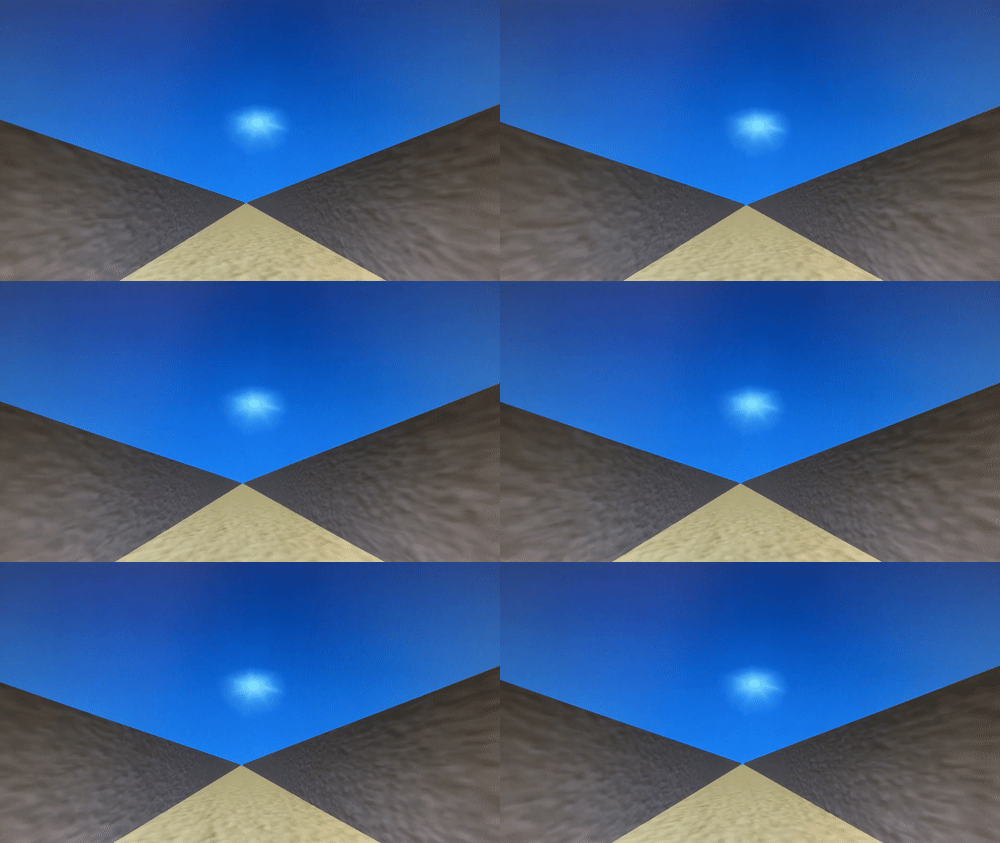
We show different direction classification performance in neural networks during navigation in a complex environment. We also observed a relationship between individual differences in the classification strength in each brain region and navigation performance. 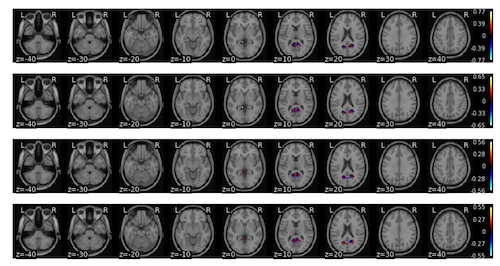
We show that embodied experience influences spatial thinking about right hands, which might account for the presence of world knowledge variability in the mental rotation task, while also suggesting that common external experience shapes performance in spatial thinking tasks. 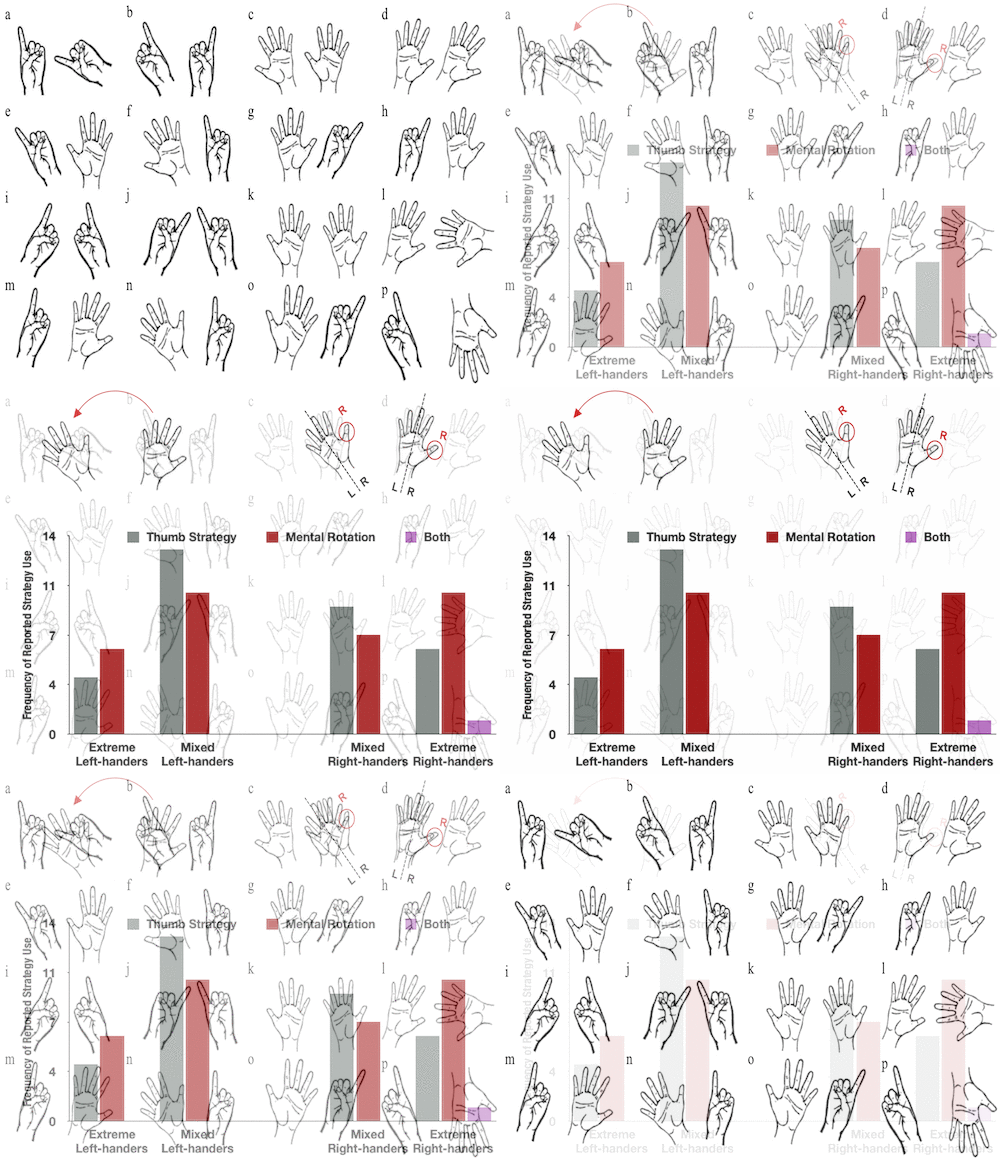
We show that people’s perception of spatial distance toward famous people is influenced by time distance. The more historical the person, the bigger the influence of the time distance. 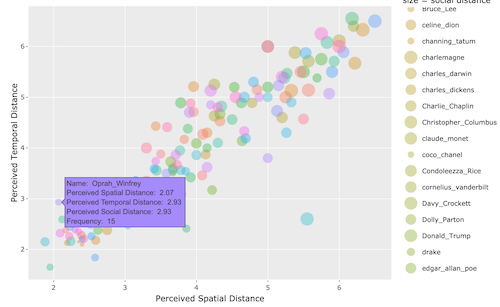
We look at navigation paths in males and females from a mobile game – Sea Hero Quest. 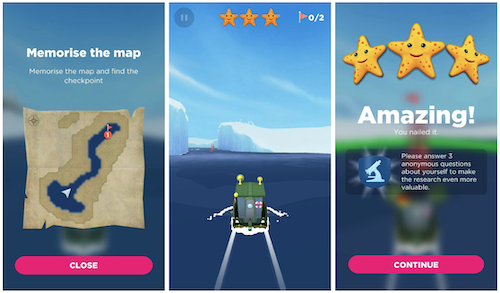
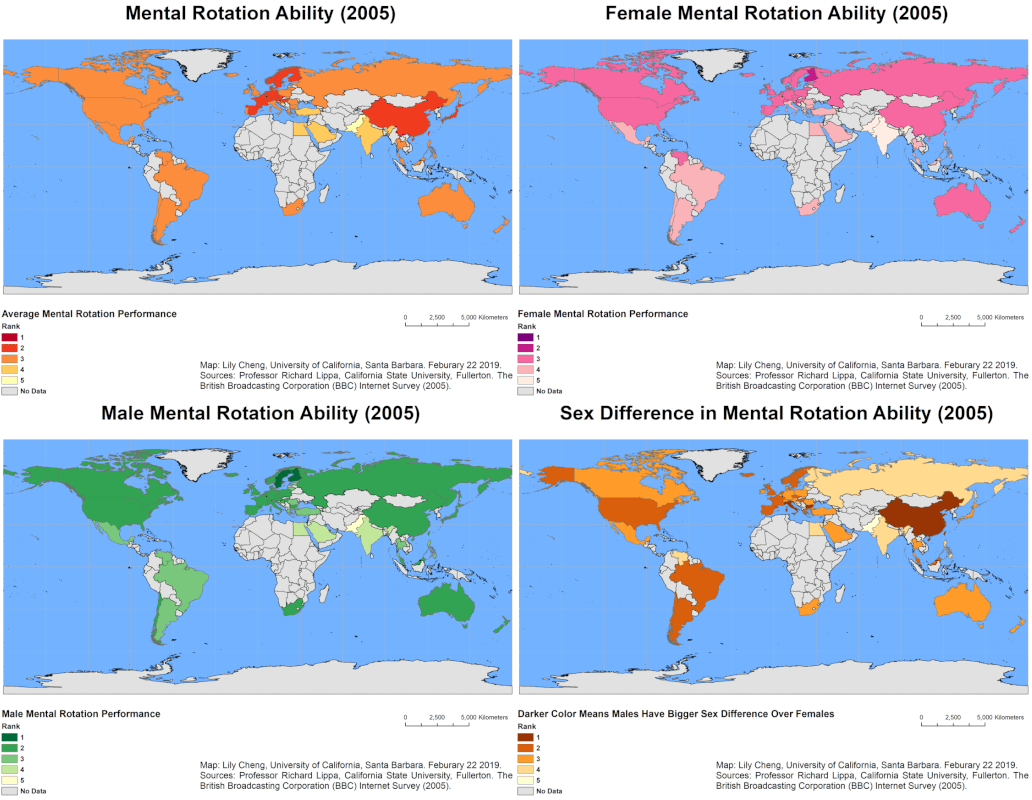
We observed consistent sex differences in mental rotation ability and line angle judgment ability across countries.